Bay of Pigs at 65: The Anatomy of a Self-Inflicted Wound, and Why It Matters Again in 2026
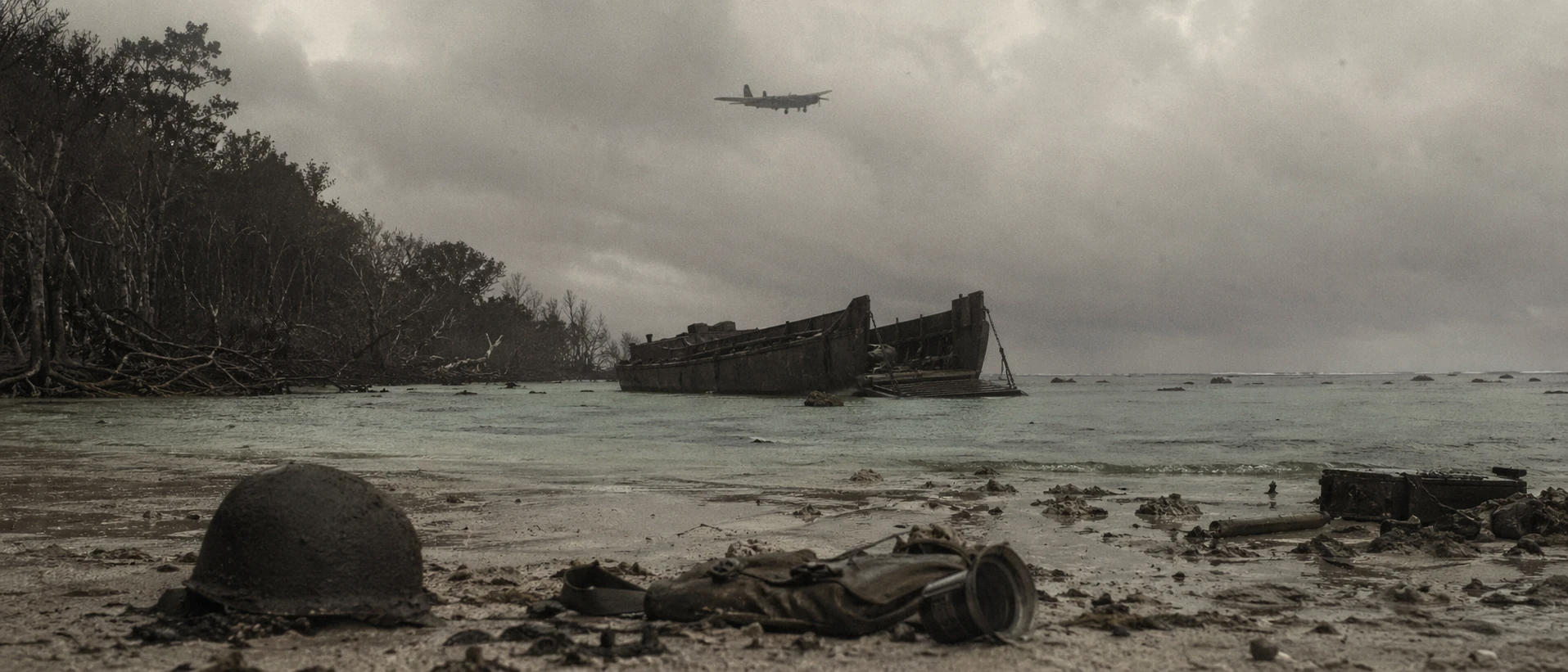
On the night of April 16, 1961, a small fleet sailed out of Puerto Cabezas, Nicaragua, carrying roughly 1,300 Cuban exiles toward a mangrove-choked stretch of southern Cuba called Bahía de Cochinos. The men of Brigade 2506 had been training in the highlands of Guatemala for almost a year, on a coffee plantation called Helvetia, at a CIA base they knew only by its cryptonym, JMTrax. Most of them believed the United States Navy would be sitting just over the horizon, ready to come in if things went badly.
It went badly. The Navy stayed where it was.
What happened over the following 72 hours has been picked apart by historians, congressional committees, four CIA inspectors general and one very angry president for sixty-five years. The newest tranche of declassified files, released in April 2026 by the National Security Archive to mark the anniversary, fills in details that the agency spent four decades fighting to keep buried. The picture that emerges is not the one Americans grew up with. The Bay of Pigs was not a noble plan undone by a young president who lost his nerve. It was a broken operation that the people running it knew was broken, and went ahead with anyway.
The Plan Nobody Believed In
The most damning sentence in Lyman Kirkpatrick's 1961 inspector general report is also the simplest: "Plausible denial was a pathetic illusion." Kirkpatrick, a CIA veteran with a polio-paralyzed body and an intact mind, spent six months interviewing the people who had run Operation Zapata. He concluded that they had built the entire enterprise on a fiction. The agency had told itself, and told the new Kennedy White House, that 1,500 lightly armed exiles could land on a beach 90 miles from the United States, defeat a 200,000-strong revolutionary army, and that nobody would notice Washington's hand in it.
Nobody who looked at the math believed this. Colonel Jack Hawkins, the Marine paramilitary chief who actually ran the brigade's training, wrote in a May 5 post-mortem that the operation had been undone in part by what he called "political considerations" but also by the agency's own refusal to be honest about what success required. His blunt formulation: "Paramilitary operations cannot be effectively conducted on a ration-card basis."
The deeper problem, the one Kirkpatrick identified and the one Richard Bissell's rebuttal could not really answer, was the assumption underneath everything. Bissell, the CIA's deputy director for plans and the operation's intellectual father, believed the landing would function as what Kirkpatrick mockingly called a "deus ex machina." The shock of an invasion would trigger a popular uprising. Anti-Castro guerrillas in the Escambray Mountains would rally. Sections of the Cuban military would defect. The whole thing would topple.
There was no evidence for any of this. The CIA's own analysts, in a position paper Kennedy never saw, had assessed that the brigade could not succeed without becoming an open American invasion. That assessment did not make it past the operational planners. Bissell wanted the operation to go forward. Allen Dulles, the CIA director, wanted it to go forward. The brief that reached the president-elect did not flag the agency's internal doubts.
There was, on top of this, the small matter of the operation no longer being secret. Castro had known about the Guatemala camps since October 1960. Cuban intelligence had infiltrated the exile groups in Miami, watched the training, counted the aircraft, and mapped the troop movements. The Hispanic American Report at Stanford had published a detailed account in November 1960. The New York Times had a story ready to run in early April 1961, until Kennedy personally asked the publisher to soften it. The exiles in Miami were calling the brigade by its name.
A covert operation that the target nation knows everything about is not a covert operation. It is a public one, dressed in costume.
What Actually Happened on the Beach
The first thing to understand about the landing itself is the geography. The original plan, codenamed Trinidad, called for a landing near the city of that name, at the foot of the Escambray Mountains. That mattered. If the brigade failed to hold the beach, men could melt into the mountains, link up with anti-Castro guerrillas, and continue as a guerrilla force. Kennedy did not like Trinidad. It looked too much like a World War II invasion. He asked for something quieter, and the planners gave him the Bay of Pigs.
The Bay of Pigs is a swamp. The terrain between the landing beaches and any meaningful interior is impassable mangrove and standing water, cut by three narrow causeways. The escape route to the Escambray, if you needed one, was 80 miles away across open ground patrolled by the Cuban army. The brigade was being landed in a place from which there was no exit but the sea.
The coral reefs nobody had mapped tore the bottoms out of landing craft. Most of the men lost their weapons and ammunition in the surf. The eight B-26 bombers sent to wipe out Castro's air force on April 15 had hit some targets but missed most of them. Crucially, the second wave of strikes, scheduled for the morning of the 17th to finish the job, was canceled by Kennedy after Adlai Stevenson got blindsided at the United Nations and the cover story collapsed in real time on the floor of the General Assembly.
That cancellation has been the focal point of recriminations ever since. Hawkins called it the decision that "doomed the operation." The agency's own historian, Jack Pfeiffer, spent the 1970s and early 1980s writing a five-volume internal history that placed the blame on Kennedy. The CIA fought to keep the fifth volume secret in perpetuity, only releasing it in 2016 after losing a Freedom of Information Act lawsuit. When you read it now, the self-serving quality is hard to miss. The agency built an operation that depended on something it knew was unlikely. When the operation failed in the way its own analysts had predicted, the agency blamed the man who had inherited it from his predecessor.
What the surviving Cuban air force did with the time the canceled strikes gave them was sink the Houston and the Río Escondido. The Río Escondido was carrying ten days of ammunition, fuel, food and the brigade's communications equipment. It went to the bottom on the morning of the first day.
By the third day, the brigade was out of ammunition and surrounded. Castro had moved roughly 20,000 troops toward the beach. Kennedy authorized six unmarked Navy fighters from the carrier Essex to provide one hour of air cover for the brigade's B-26s on the morning of the 19th. They were forbidden to engage Cuban aircraft or strafe ground targets. The mission was an air umbrella, nothing more.
The fighters arrived an hour late. The cause was a time-zone error: nobody had reconciled the difference between Nicaragua, where the B-26s took off, and Cuba. Four American pilots, civilians flying for the agency under contract, were shot down and killed because nobody at the operational level had checked the clocks. Their families were told to keep the medals secret until 1976.
A CIA officer named Grayston Lynch, riding on a transport boat as the lead field operative on the beach, fired his deck guns at planes overhead in the chaos and discovered later that he had been shooting at his own side. The brigade's bombers had been painted with the markings of the Cuban Air Force, the FAR, as part of a cover story. "We couldn't tell them from the Castro planes," Lynch said.
By nightfall on April 19, it was over. About 114 men of the brigade were dead. 1,189 were captured. They sat in Cuban prisons for twenty months while Robert Kennedy worked the phones, raising $53 million in baby food and pharmaceuticals from American manufacturers in exchange for their release.
The Part Almost Nobody Talks About
The newly declassified files include a document that should reframe how the Bay of Pigs is taught. In August 1961, four months after the disaster, a White House aide named Richard Goodwin met secretly with Che Guevara at a conference in Punta del Este, Uruguay. Guevara, in Goodwin's account, thanked him for the invasion. He said it had transformed Cuba from "an aggrieved little country to an equal." It had legitimized the revolution at home and made Castro a hero across the Global South. It had pushed Cuba into Moscow's arms in a way that diplomacy alone never could have done.
Then Guevara made an offer. Cuba was prepared, he said, to discuss almost everything with Washington. Compensation for nationalized property. Limits on its support for revolutionary movements abroad. A commitment to neutrality in the Cold War. The one thing Cuba would not negotiate was the political character of the regime itself.
Goodwin wrote it up. Kennedy read it. Nothing happened. Within a year, Soviet medium-range ballistic missiles were on Cuban soil, and the world came as close to nuclear war as it has ever been.
The Cuban Missile Crisis is usually told as a story about Khrushchev's recklessness and Kennedy's cool head. The declassified record suggests it should also be told as the direct downstream consequence of the Bay of Pigs. Castro asked Moscow for the missiles in part because he was certain, with reason, that Washington was going to try again. The Pentagon's plans for Operation Mongoose, the covert sabotage and assassination program that ran throughout 1961 and 1962, gave him plenty of evidence. The CIA had paid the Mafia, with funds drawn from the Bay of Pigs invasion budget, to develop poison pills for Castro. None of this was paranoia on his part.
What the Failure Cost the Agency
Kennedy's reaction to the disaster is the famous line, reported by various aides in various forms: he said he wanted to splinter the CIA into a thousand pieces and scatter them to the winds. He fired Allen Dulles, fired Bissell, and fired the deputy director Charles Cabell. He moved covert paramilitary action under tighter White House control. The president's confidence in the agency's judgment never recovered, and neither did the agency's confidence in itself.
The Kirkpatrick report was so devastating that John McCone, the new CIA director, ordered nineteen of the twenty existing copies burned. He held one. The single surviving copy was the one Peter Kornbluh of the National Security Archive eventually pried loose under FOIA in the late 1990s. McCone's deputy, William Cabell, wrote in a December 1961 memo that the report, in unfriendly hands, "could become a weapon unjustifiably used to attack the entire mission, organization, and functioning of the Agency." That sentence is itself a small monument to bureaucratic self-protection. The report was not unjust. Cabell knew it was not unjust. He just knew what would happen if outsiders read it.
The institutional damage went beyond personalities. The Bay of Pigs is the moment when the assumption that the CIA could quietly engineer regime change in small countries collided with the reality that small countries were paying attention, training their own militaries, building their own intelligence services, and quite capable of fighting back. The agency had successfully overthrown Mossadegh in Iran in 1953 and Árbenz in Guatemala in 1954. The Cuba operation was modeled on Guatemala. The planners thought they were running the same playbook. They were not. Cuba had a real revolutionary army with real combat experience, a population that genuinely supported the regime in 1961, and a leader who had personally led a guerrilla war and knew exactly what an amphibious landing looked like before it happened.
This is the part of the lesson that gets lost in the standard telling. The Bay of Pigs did not fail because of Kennedy's missing airstrikes. It failed because the operation rested on a model of how the world worked that was already obsolete in 1961. You could not just drop 1,500 men on a beach and expect a country to topple. The era when that worked, if it ever really worked, was over.
The Rhyme in 2026
Which brings us to April 2026. As of this month, two sources told USA Today that the Pentagon has been quietly developing contingency plans for a U.S. military operation in Cuba, on instructions from the White House. SOUTHCOM's official line is that it "routinely reviews and updates contingency plans," which is true and tells you nothing. President Trump has been talking openly about Cuba for months. At a Miami investment forum on March 27, he said Cuba could be "next." On April 13, asked about Iran, he told reporters: "We may stop by Cuba after we're finished with this." In January he signed an executive order declaring the Cuban government an "unusual and extraordinary threat" and authorizing tariffs on countries supplying it with oil.
The economic squeeze has worked, at least in the short term. Cuba is in the worst energy crisis of its post-Soviet existence. Hospitals run on generators. Schools close. A Russian tanker arrived on March 31 with 700,000 barrels of crude, the first real shipment in months, and a Havana resident told reporters it was like "finding water in the desert."
Brian Fonseca at Florida International University, who studies the Cuban military, told USA Today that the current planning is "a lot of signaling." He also said something more interesting: a U.S. military campaign would likely produce a quick tactical victory, given the state of Cuba's aging hardware. The political victory would be much harder.
This is precisely the problem the Bay of Pigs planners failed to think through. Knocking down a government is the easy part. Replacing it with something that sticks is the part nobody at Langley in 1961 had a serious answer for, and nobody seems to have a serious answer for now. The Cuban exile community in Miami in 1961 included a credible alternative government in waiting, the Cuban Revolutionary Council under José Miró Cardona, and it still was not enough. The exile community in 2026 is older, more fragmented, and further removed from the island. President Miguel Díaz-Canel, asked on NBC what would happen, gave the answer Cuban leaders have given for sixty-five years. He said Cubans would fight and that if they had to die, they would die.
He may be bluffing. He may not be. The 1961 planners assumed the Cuban people would not fight for Castro. They were wrong about that, and the cost of being wrong was 114 dead exiles, four dead American pilots, twenty months of imprisonment for a thousand-plus men, the destruction of the CIA's reputation as a competent paramilitary actor, the consolidation of a regime that has now outlasted twelve American presidents, and the placement of Soviet nuclear weapons ninety miles from Florida.
The men who ran Operation Zapata were not stupid. Bissell was one of the most brilliant officers the agency ever produced. Dulles had run the OSS in Switzerland during the war. Hawkins was a decorated Marine. They failed because they convinced themselves of a story they wanted to be true, ignored the evidence in front of them, and pushed forward an operation whose success depended on a popular uprising they had no real reason to expect.
If the people now drawing up contingency plans at SOUTHCOM have read the Kirkpatrick report, they have a chance to do better. If they have only read the Pfeiffer history, the one that blames Kennedy and exonerates the agency, they are reading the wrong book.
What would Kirkpatrick say if you handed him the current Cuba file?
Probably the same thing he wrote in 1961. Plausible denial is a pathetic illusion. The agency is going beyond the area of its responsibility and beyond the area of its capability. It is not the same agency now, and it is not the same Cuba. But the temptation to believe a clean little operation will deliver a clean little outcome is exactly the temptation that put 1,500 men on a swamp beach in April 1961 and left them there.