health
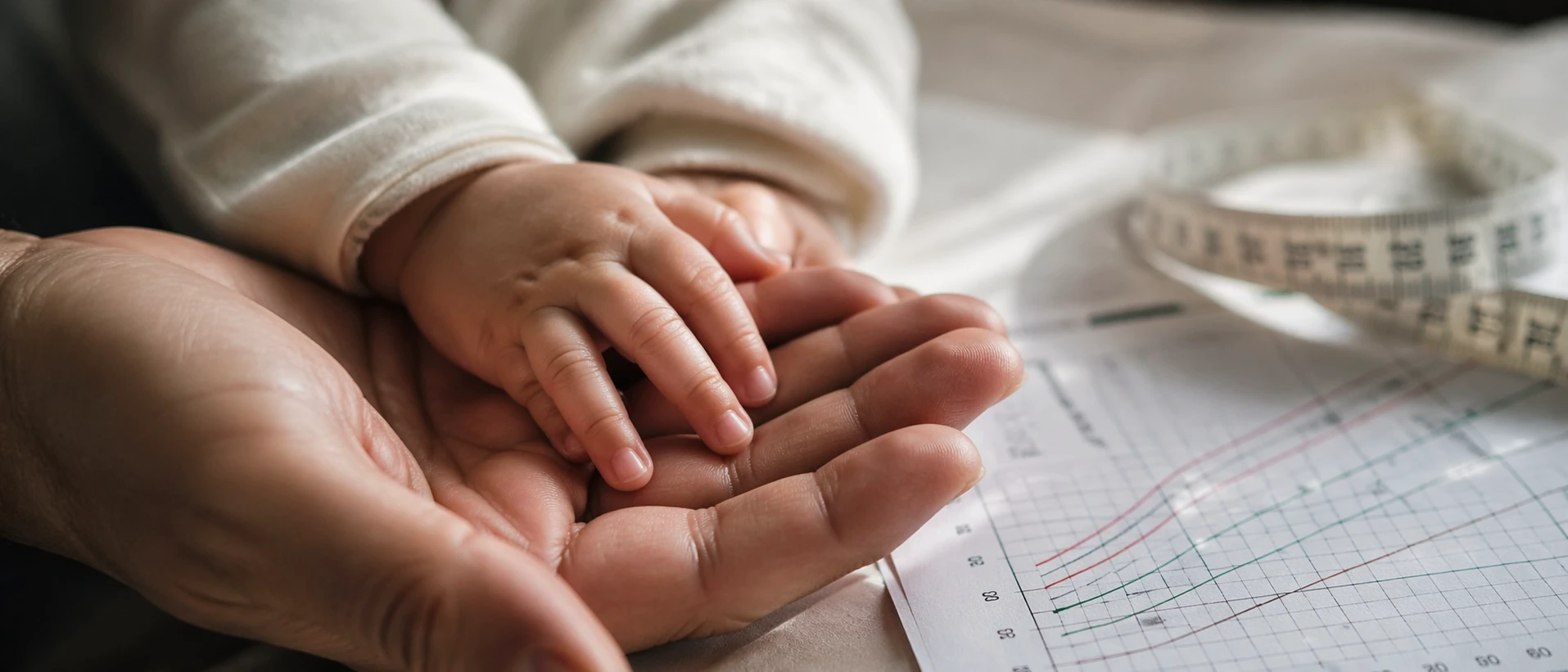
How Poor Nutrition in Infancy Shapes Lifelong Health
A new study in Pediatric Research tracking 2,700 infants in Nanjing confirms what decades of research keeps suggesting: inadequate nutrition in the first year of life leaves marks that don't fade. Higher rates of metabolic disease, lower cognitive performance, shorter adult stature, and altered gene regulation persisting sixty years later. The window for prevention is narrow, the cost of missing it is lifelong, and the screening tools already exist.
Gina Romano · Oct 27, 2026
opinion
250 Years Since Adam Smith Published The Wealth of Nations: The Book That Rewrote the World
On 9 March 1776, a shy Scottish moral philosopher named Adam Smith published An Inquiry into the Nature and Causes of the Wealth of Nations. The same week, his friend James Watt fired the first commercial steam engine at a coal mine in Tipton. Two hundred and fifty years on, the book is still misread, the invisible hand still misunderstood, and Smith's real argument, that markets are moral institutions, is more relevant than ever.
Convergence Wire · Oct 6, 2026
analysis
The Ghost of Suez: What Britain\'s 1956 Collapse Tells Us About America\'s Gulf War
In November 1956, Britain took Port Said and still lost its empire, broken not by Soviet threats but by a Washington that squeezed the pound until Eden capitulated. Seventy years later, American carriers, Marines, and THAAD batteries are pulled from the Pacific to pry open the Strait of Hormuz while China watches from the wings. The parallel does not predict. It clarifies. And the question it leaves behind is uncomfortable.
Convergence Wire · May 10, 2026
environment
A Super El Niño in 2026? What the Pacific Is Quietly Telling Us
NOAA now puts the odds of El Niño emerging by mid 2026 at 61 percent, with a one in four chance of a strong event. Some models suggest something rarer. A super El Niño that could exceed the record setting 2015 to 2016 event. Dropped onto an ocean already running hotter than ever, the consequences for weather, coral reefs, food security, and global temperature records could reshape the year. Here is what the data actually says.
Nathan Zhao · Apr 25, 2026
science
How the Great Pyramid of Giza Was Built: A New Computational Theory Says the Ramp Was Hidden Inside It All Along
A new study in npj Heritage Science proposes that the Great Pyramid of Giza was built using an Integrated Edge-Ramp, a helical haul path formed by temporarily omitting and later backfilling perimeter stones on each face. Spanish computer engineer Vicente Luis Rosell Roig used parametric modeling, discrete-event logistics, and finite element analysis to show the method could place a stone every four to six minutes and finish within Khufu's reign.
Edith Perez · Apr 14, 2026
science
The Bone Detective Who Quietly Rewired Science
Georges Cuvier never treated a patient, but the method he built in the Museum of Natural History in Paris quietly reshaped how scientists and physicians read the human body. His principle of the correlation of parts turned single bones into legible sentences, established extinction as scientific fact, and handed medicine the conceptual tools that produced pathological anatomy, the clinical gaze, and eventually the modern habit of localizing disease through structural comparison.
Edith Perez · Apr 10, 2026
opinion
Everything Is Changing in the Middle East, and Europe Is Watching From the Sidelines
The 2026 Gulf war has shattered American primacy in the Middle East and exposed Europe as a press-conference power with no real seat at the table. Four regional capitals, Riyadh, Ankara, Tel Aviv, and a wounded Tehran, are sketching the new order, with Beijing playing the patient outside hand. Macron and Starmer convened forty-nine countries in Paris. Iran closed the Strait of Hormuz again the next day.
Convergence Wire · Apr 4, 2026
science
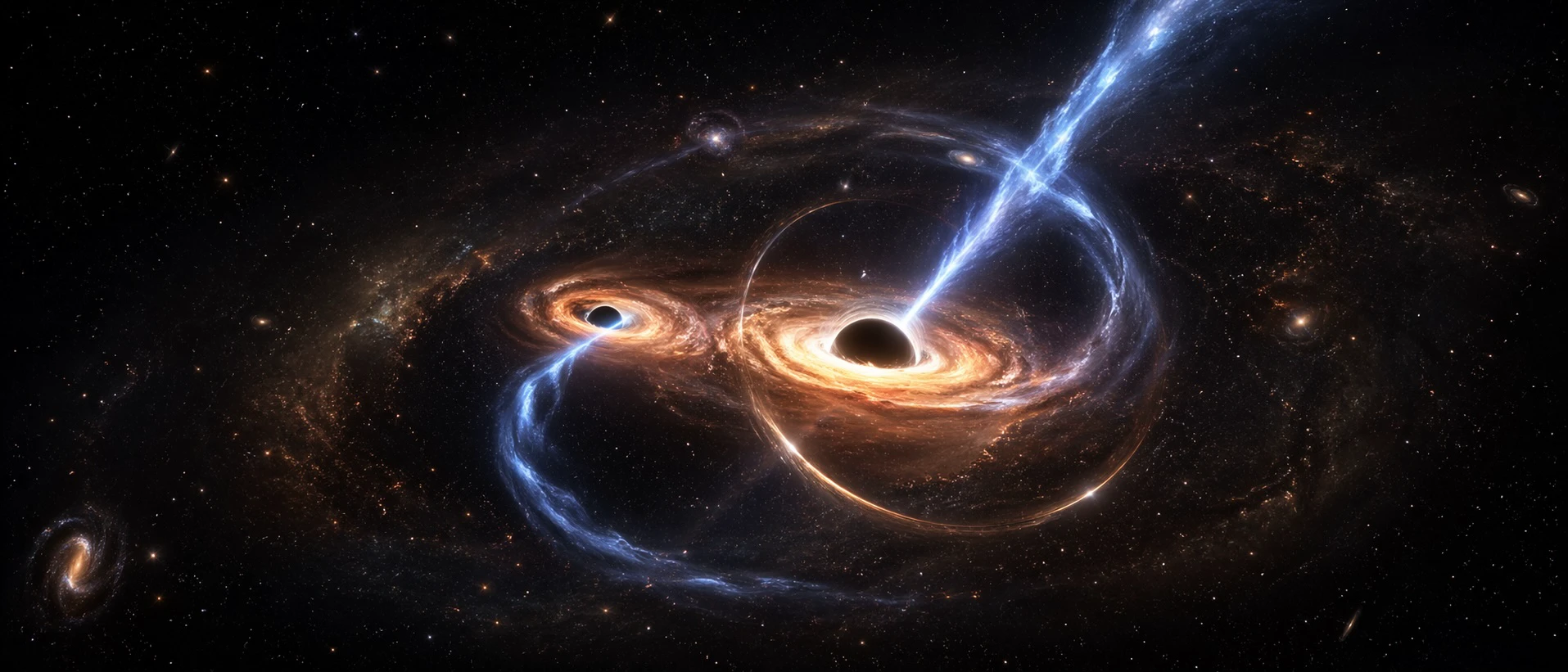
A Pair of Supermassive Black Holes Are Locked in a Final Spiral, and Earth Will Hear the Crash
Astronomers led by Silke Britzen at the Max Planck Institute for Radio Astronomy have found the first close pair of supermassive black holes in the galaxy Markarian 501, about 500 million light-years away. The two giants orbit each other every 121 days and could merge within a century. When they do, the gravitational wave signal will be the loudest cosmic event ever recorded by instruments on Earth.
Edith Perez · Mar 29, 2026
opinion
The Internet Stopped Being Fun, and We Know Exactly When It Happened
The internet feels worse than it used to, and the explanation is not nostalgia. Around 2010, platforms swapped chronological feeds for ranked ones. Then TikTok abandoned the social graph entirely, and everyone copied. The result is a product engineered to hold your attention rather than serve your interests, with measurable consequences for screen time, mental health, and the simple pleasure of choosing what to look at.
Gregory Adams · Mar 20, 2026