Everything Is Changing in the Middle East, and Europe Is Watching From the Sidelines
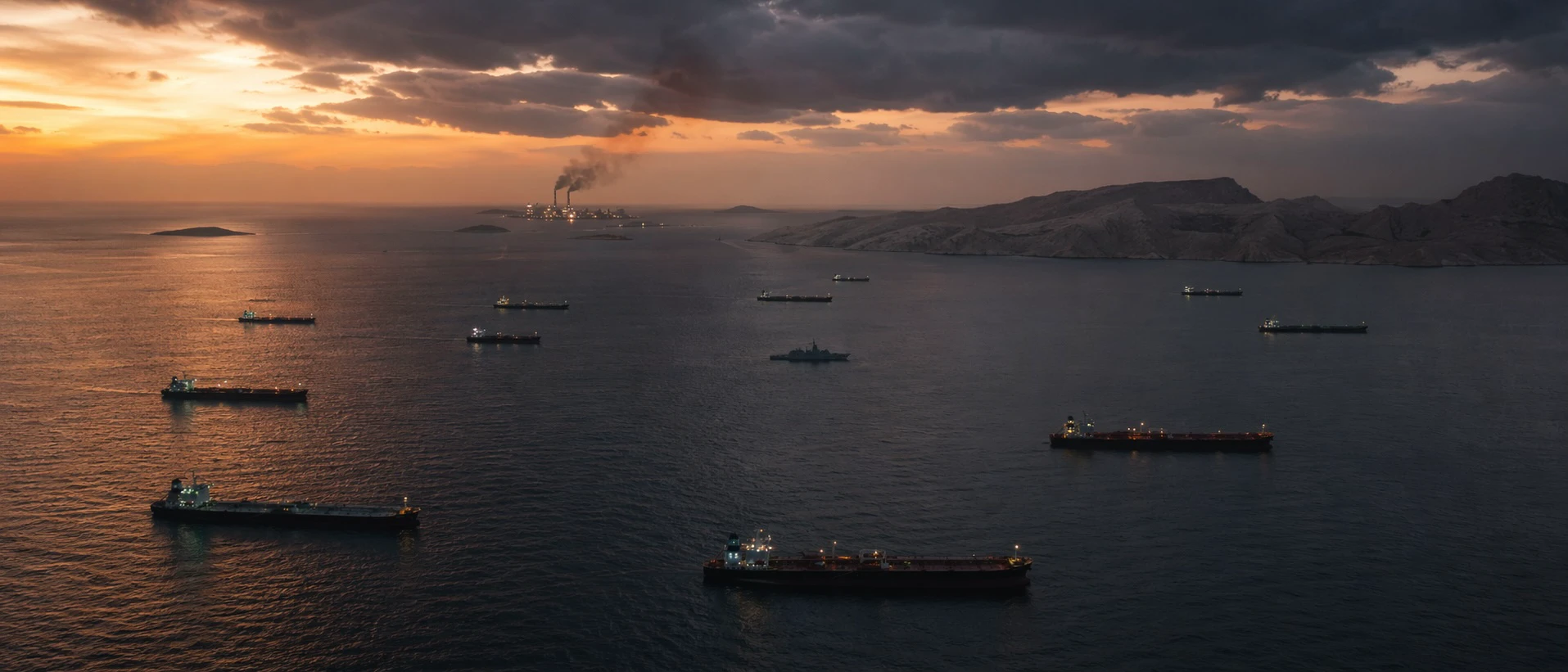
The map of the Middle East that existed before February 28, 2026 no longer exists. American B-52s flying unopposed over Iranian airspace, Iranian missiles raining on every single Gulf Cooperation Council state for the first time in history, the Supreme Leader killed in the opening salvo, the Strait of Hormuz opening and closing like a faulty valve depending on who feels betrayed that morning. The wreckage is still smoking. And while the wreckage smokes, four capitals, Riyadh, Ankara, Tel Aviv, and a wounded but still-standing Tehran, are sketching out what comes next. So is Beijing. Washington still thinks it is.
What is striking is who is missing from that sketch. Brussels.
A region with four poles, not one
For thirty years, American primacy in the Middle East was a load-bearing assumption. You could argue about whether it was good or bad, sustainable or self-defeating, but you did not argue about whether it was real. The Twelve-Day War of June 2025 cracked that assumption. The longer war that followed in February and March of 2026 has shattered it.
Iran took a beating that would have ended most regimes. Ali Khamenei was killed in the opening hours. Hundreds of strikes hit at least 26 of the country's 31 provinces. The IRGC's command structure was gutted. And yet Tehran is still standing, still in control of the Strait, still negotiating from a position weaker than it was a year ago but stronger than its enemies expected. Pezeshkian gave a televised address calling it a great victory. Nobody believed him, but nobody could ignore him either.
Israel emerged with its air force intact and its prime minister claiming a generational triumph. What actually happened on the ground was messier. Iranian missiles got through Israeli air defenses often enough to hit an oil refinery, a technical university, and defense installations. Censorship clamped down on how much. Tel Aviv used so many interceptors that Washington had to top up the magazine. Netanyahu won the war he wanted. He also confirmed every Gulf suspicion that Israel is not a partner but a rival, willing to drag everyone else into a conflict on its own timetable.
Saudi Arabia took missile fire and concluded that betting its security on either Israel or America was a mistake worth correcting. Riyadh is now finalizing a defense pact with Turkey and has deepened its existing one with Pakistan. Mohammed bin Salman did not show up to Trump's Gaza peace summit in Egypt last autumn. He has not been pretending since.
Turkey is the quiet winner. Erdoğan visited Riyadh and Cairo in February. Turkish drones are about to flow into Saudi inventories. Ankara filled the vacuums Iran left in Syria during 2025 and has positioned itself as the most operationally flexible middle power in the region, willing to deploy expeditionary forces, manage proxies, and broker talks all at once. A Metropoll survey put Turkish public approval of Erdoğan's regional policy at its highest level in twelve years. He is not hiding his ambitions.
Israel's former prime minister Naftali Bennett said publicly that after Iran, the next target should be Turkey. Turkish foreign minister Hakan Fidan responded that Israel "cannot live without an enemy." Die Welt ran a piece this week openly speculating that Israel and Turkey are sliding toward direct military confrontation. A Saudi insider told the Christian Science Monitor: "After Iran and Turkey, there is only a matter of time before Israel turns its sights on Arab Gulf states." That is not paranoia. That is the operating assumption now in three of the four regional capitals that matter.
China has played this beautifully. Beijing did not fire a shot, did not commit a battalion, did not promise anyone anything publicly. It did, according to the White House itself, work the phones at the highest levels in the final hours before the April 7 ceasefire. Iranian officials credited a last-minute Chinese push with bringing Tehran to yes. Trump, who has spent a decade attacking China on trade, gave Xi Jinping a verbal hug and asked Beijing to delay their planned summit so he could focus on Iran. The optics were ugly for an American president. The optics were perfect for a Chinese one. China now buys roughly 90 percent of Iranian oil exports, has investment commitments stretching to 2040, and has demonstrated to every government from Riyadh to Cairo that it can do something Washington apparently cannot, which is talk to all sides at once and get a result.
That is the multipolar Middle East. Four regional powers with overlapping ambitions and incompatible visions, plus a Chinese hand on the diplomatic tiller, plus an American military presence that is still the largest in the region but no longer the dispositive one. Anyone looking for the European Union in that picture is looking in the wrong photograph.
Breathless in Paris
Macron and Starmer convened forty-nine countries on April 17 at the Élysée to announce the Strait of Hormuz Maritime Freedom of Navigation Initiative. Meloni came in person. So did Merz. The optics were impressive. The substance was thinner.
Read the language carefully. The mission is "strictly defensive." It will deploy "when security conditions allow." It excludes belligerents, which means it excludes the United States, Israel, and Iran, which means it excludes everyone whose buy-in would actually make it work. France sent its nuclear-powered carrier to the region. Britain is offering mine-hunting drones from the RFA Lyme Bay, a vessel which is, charitably, not a frontline combatant. Italy will commit "a certain number of naval units, according to what will be authorized by the Italian parliament." Germany would like a UN resolution first, please.
Trump's response was to call NATO "useless" and "a paper tiger" on Truth Social and to tell the United Kingdom: "You don't even have a navy." The Royal Navy has deployed exactly one major warship, HMS Dragon, to the eastern Mediterranean throughout this war. Trump is wrong on the principle and right on the facts.
Macron declared that he would not accept the "privatization" of the Strait, referring to the tolls Iran has signaled it intends to charge passing ships. It was a good line. It is also a line. Iran charges what it wants in the Strait because Iran controls the geography and has demonstrated it will close the waterway whenever it feels the ceasefire is being violated. Iran closed it again on April 18, less than 24 hours after the Paris summit announced the European initiative. The IRGC announcement on Telegram simply ignored the existence of European naval planning. Why wouldn't it.
Ursula von der Leyen says the EU supports the United States and Israel. That sentence captures the European problem precisely. Europe wants to mediate, but it has already picked a side. It wants to be a peacemaker, but it has no credibility with Tehran, no sway with Jerusalem, no military weight that would make Washington listen, and no economic instrument it has been willing to use against any of the parties. Europe was not credible in Ukraine. It is not credible here. It was not invited to the Pakistan-mediated talks in Islamabad. It was not invited to the quartet of Saudi Arabia, Turkey, Egypt, and Pakistan that has emerged as the primary regional negotiating channel. It was not invited to the Trump-Xi back channel.
The Hormuz initiative is what diplomacy looks like when you have been left at the gate and want the photographers to think you arrived in a different car.
It is worth pausing on what this war has cost so far, because the strategic discussion can drift into abstraction quickly. At least 3,000 dead in Iran. More than 2,100 are dead in Lebanon, where Israel kept hitting Hezbollah positions for weeks after the original Iran ceasefire on the grounds that Lebanon was never part of the deal. Twenty-three dead in Israel. Thirteen American service members. Civilians killed in Bahrain, Kuwait, Oman, Saudi Arabia, the UAE, Qatar, Azerbaijan, and Cyprus. Twenty thousand seafarers are stranded on hundreds of ships in and around the Strait while the parties argue about whether the waterway is open or closed today. The IMF has cut its 2026 GCC growth forecast from 4.3 percent to 2 percent. Saudi Arabia's projection alone dropped to 3.1 percent. None of this shows up in the press releases from Paris.
The Lebanon track tells you everything you need to know about how durable the current settlement is. Trump announced a ten-day Israel-Lebanon ceasefire on April 9, after Israel had spent the preceding weeks pulverizing what remained of Hezbollah's command infrastructure. Iran called the strikes a violation of the spirit of the broader ceasefire. Israel and Washington said Lebanon was never included. Pakistan, the formal mediator, contradicted both. The Israeli military is now imposing a "yellow line" inside southern Lebanon, barring residents from returning to 55 villages in areas the IDF still occupies. Israeli officials are openly calling it a buffer zone. The Lebanese call it "occupation." Both are correct.
That pattern, a ceasefire that is not really a ceasefire, with each side using a different definition of which territory and which actors are covered, is the template for everything that comes next. The ten-day Lebanon truce expires on roughly the same timeline as the Iran one. Iran's foreign minister, Esmail Baghaei, welcomed the Lebanon pause and said it was consistent with the broader US-Iran agreement, which is diplomatic code for "we reserve the right to consider it a violation if it ends badly." Hezbollah is rebuilding. The Israeli army says it has identified Hezbollah personnel approaching IDF positions and conducted "precise strikes." This is what the post-war regional order looks like in practice. Continuous low-level hostilities punctuated by formal ceasefires that everyone interprets differently.
There is a real question hiding inside the European posture, which is whether any of this can be fixed by political will or whether it is structural. Britain's navy is genuinely smaller than it was a generation ago. Germany still requires parliamentary approval for almost any meaningful deployment. France can project force but cannot do so at the scale required to police a waterway through which a fifth of global oil normally passes. Italy has the will and not the assets. Brussels has neither the army nor the consensus. The four countries that have actually moved the needle in this conflict are Pakistan, Qatar, China, and the United States, in that order. None of them is European, and one of them is openly hostile to European strategic autonomy.
Europe could have built credibility over the past two years by maintaining channels with Tehran during the nuclear dispute, by pushing harder against the Israeli expansionist agenda in Lebanon and Syria when that pressure might have been useful, by investing in the kind of naval presence that would have made the Hormuz initiative something more than a press release. It did none of these things. It is now trying to assemble the toolkit during the emergency. Anyone who has worked on a tight deadline knows how that ends.
The era of unchallenged American dominance in this region is over. The era of European relevance never quite began.
What replaces them is a more crowded, more transactional order, with multiple regional powers each capable of saying no and at least one of them, Iran, capable of imposing real costs on the global economy when it does. The Saudi-Turkish-Egyptian-Pakistani quartet is the closest thing to an Arab-Islamic security architecture that the region has produced since the Arab League in its better days, and it is being built explicitly to contain both Iran and Israel. Beijing is the patient outside party with money to spend and no military bases to defend themselves. Trump's America is still the largest military presence and the loudest political voice, but it is improvising week to week, threatening to destroy Iran's power grid one day and praising Xi the next, with no apparent strategy beyond the current news cycle.
I am writing this on April 21. The April 7 ceasefire expires tomorrow. Iran has closed the Strait. American warships are blockading Iranian ports. Pakistani mediators are trying to extend the truce by another two weeks while negotiating the three points still in dispute, which are the nuclear program, the Strait, and sanctions relief. Nobody I have read seriously believes the underlying conflict has been resolved. The most that can be said is that the parties have agreed to pause while the wreckage cools.
The next Israeli attack on Iran is being openly discussed in Israeli media as a matter of when, not if. The next Iranian attempt to push the Americans out of the Gulf is being openly discussed in Tehran. The Houthis have so far stayed out of this round. Hezbollah is rebuilding under a fragile truce that nobody on either side trusts. The Kurds are watching. Turkey is watching the Kurds.
Peace, if it comes, will not restore anything that existed before February 28. It will be the architecture that fits the wreckage. A more fragmented region, with more poles, less American discipline, more Chinese influence, and a Europe that turns up at the press conference but has gone home before the deal is signed.
Until the next war.